

NFT are the acronyms used to refer to non-fungible tokens (Non-fungible token), which are currently characterized by being unique and of limited quantity have become the most common form of digital assets, because they are backed by blockchain technology and have undoubtedly come to redefine the web together with the digital economy.
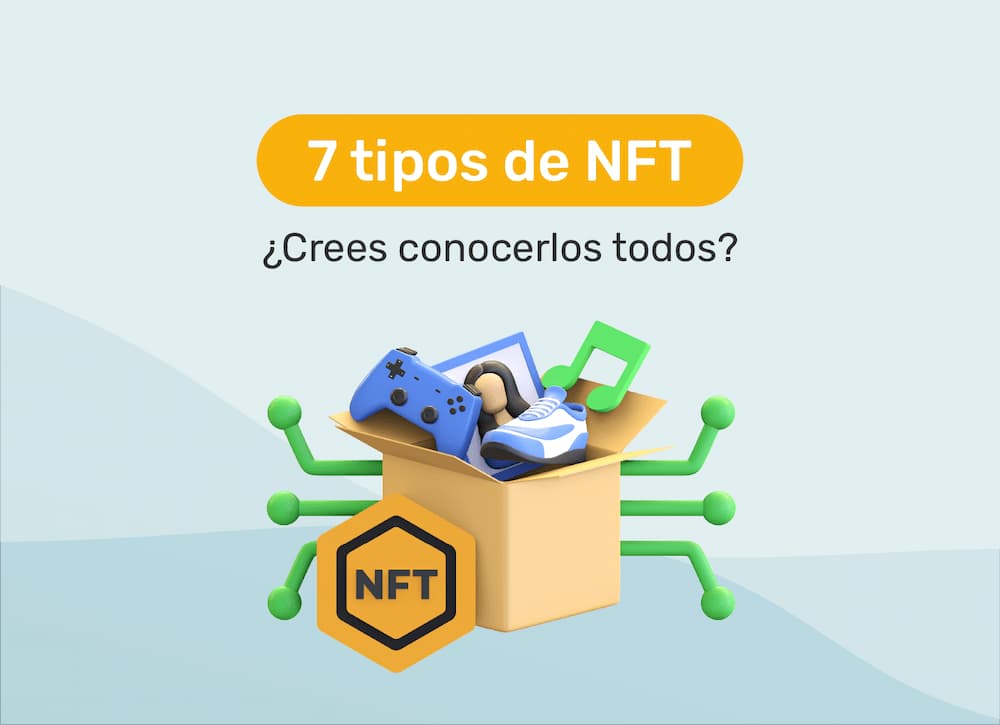
Because The most popular NFTs are linked to the art world or video games, you may think that these are only used to market artistic expressions and digital items; however, there are several types of non-fungible tokens, which are classified according to the purpose for which they are used, that's why at El Dorado we tell you about each of them and the possibilities they offer.
Before we dive into the different applications of NFTs, it is important to understand the difference between expendable and non-expendable property; the former are those that are consumed when used and can be exchanged, since they have a value associated with their number, measure or weight. An example of a fungible asset is fiat money, if you have a 20 dollar bill you can exchange it for another 20 dollar bill without any problem, after all, the value is the same; in addition, the ticket is consumed when paying for a good or service.
While non-expendable property is irreplaceable and is not consumed when it is enjoyed, such would be the case of an exclusive piece of jewelry, you can use it on different occasions without it being consumed and even if it has a monetary value, it cannot be replaced by another, since no two are the same.
Therefore, Can you think of each NFT as a unique and unrepeatable piece, similar to the Mona Lisa, there is only one in the world and although copies can be made and sold, none will replace the original.
Linked to art
As you may have noticed, NFTs have similarities with works of art, which is why this is one of the best-known types today, and that is why the most prominent projects are tokens that represent works of art or digital illustrations, such as collections CryptoPunks and Bored Ape. The success in this sector is due, in part, to the same reasons that have made art and fashion markets successful: People like to have status and socialize based on common elements, which is possible with this type of NFT, since by possessing a unique and desired token You get status while you become part of a digital community with similar tastes.
In addition, they allow new forms of funding for emerging artists, who can more easily sell works of art over the internet, while ensuring authenticity.
Linked to music
This is one of the areas that has been gaining greater importance when it comes to non-fungible tokens, since the monetization models linked to Web2 offer monetary rewards that leave a lot to be desired for most musicians. To give you a clearer idea, in 2021 there were more than eight million musicians on streaming platforms such as Spotify, however, The number of artists who generated more than 50,000 dollars a year did not reach 15,000 users.
That is why projects have emerged, which seek to create, through NFTs, a new music industry in which most of the profits go to music creators. The possibilities are varied, including creating a musical project from scratch fully stored on Blockchain, increase streaming earnings for independent artists through new platforms such as sound.xyz and allow fans and musicians to be co-owners of musical pieces.
Of course, this type of NFT can also be taken advantage of by superstars, but the exciting thing is to know that they can transform the industry to bring greater benefits to independent musicians and their fans.
Of access
This is one of the least explored types, but it's worth mentioning. Can you imagine that to attend a concert you only need a non-fungible token? Well, this will probably be possible in the near future, since NFTs can be used to replace entrance tickets to events, which would reduce market friction, while allowing for wide interoperability. In the same way, they are an excellent alternative to provide exclusive access to digital spaces, such as Discord channels or virtual classes.
Linked to video games
Gone are the days when video games were children's things; nowadays there are those who, in addition to playing for fun, also play for financial rewards. Of course, this has made NFTs linked to video games some of the most popular, thanks in part to games like Axie Infinity, where Are non-fungible tokens used to generate digital assets that can be exchanged by their users for profitability.
However, before they were implemented in this sector, players were already spending Exorbitant sums of money in virtual goods, although these do not become the user's property, but belong to the platform. This means that these digital assets cannot be used in other video games, which is one of the solutions provided by non-fungible tokens; solving the problem of interoperability and allow users to own those items for which they have paid real money, so beyond using them as a reward, they will also become a valuable asset for companies that develop virtual games.
Interchangeable for physical goods
The power of these tokens goes beyond the digital world, since can be used to obtain physical objects that are part of a collection, basically these NFTs become a single certificate of ownership that allows the holder to claim the physical asset whenever they want. This type of NFT is already being implemented by Dolce & Gabana and Ubisoft, opening the door so that other industries can also incorporate this new technology into their projects.
Of identity
The main companies linked to Web2 have demonstrated diverse failures in handling personal information; these include the hacking of sensitive information, abrupt changes in privacy policies and the commercialization of personal data. Although blockchain technology was already mentioned among supporters of decentralization as an alternative for creating more secure digital identities, the arrival of NFTs has allowed this application to be closer to reality.
Contrary to what some people think, blockchains like those of Ethereum and Bitcoin have never been hacked, thanks to the numerous nodes that are maintained in the network; this means that blockchain technology offers greater security than other traditional alternatives and NFTs can be the perfect complement to reinforce levels of security and protection of personal data.
Through these tokens you would store your personal data to easily use them as credentials, allowing a more secure way to identify yourself on different platforms in an interoperable way, while deciding with whom to share aspects related to your identity.
Linked to databases
Web3 seeks decentralization, but to achieve this objective it is essential to find alternatives for data storage; fortunately, NFTs are presented as the solution, since through them it is possible for users to become owners of their data stored online. Because the data would remain in a trustless system, there are no third parties who can hack or sell that data without the owner's consent.
While non-fungible tokens are only in their early stages of development and adoption, the fact that more and more sectors are studying how to implement them is exciting, and a good indicator that this new technology will become part of everyday life in the future. Therefore, understanding each of their types is essential on this path to digital transformation. Did you know them all? Or have any of them surprised you? Let us know in the comments! And remember to follow us to learn more about El Dorado and the crypto world.