

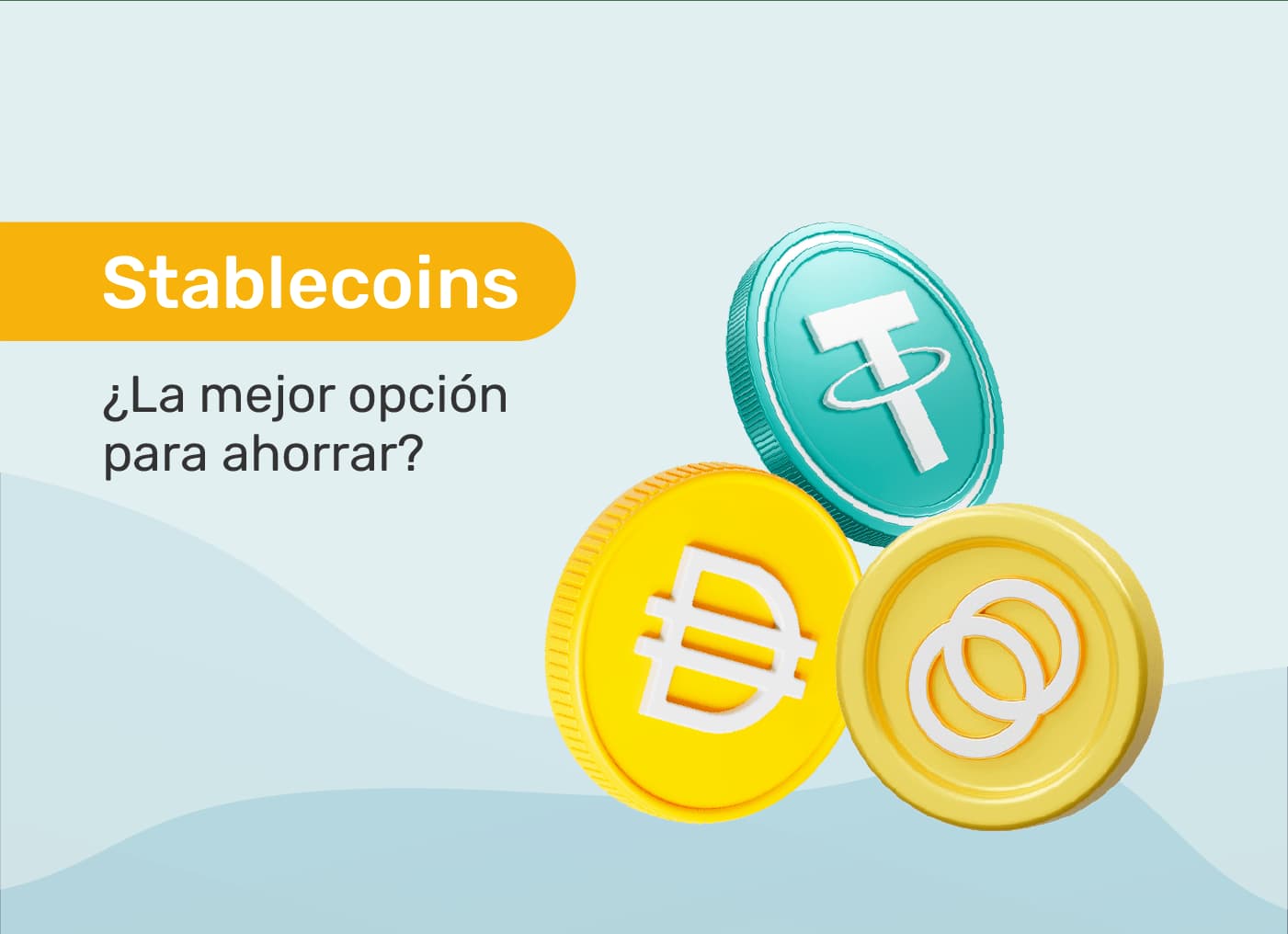
One of the main attractions of cryptocurrencies is the possibility of obtaining very high returns when investing in them. This is the case of Bitcoin and Ethereum, which originally had a price of less than one cent of a dollar and, over time, have multiplied in value, reaching thousands of dollars.
However, just as they rise dramatically, they can fall and crash your savings due to their high volatility. What was originally believed to be revolutionary savings assets ended up becoming a high-risk option.
Luckily, in the crypto community, problems are solved with creativity, ingenuity and, of course, blockchain technology. This gave way to the development of stablecoins, cryptocurrencies whose price is more stable and protects both investors and savers from the sharp drops in the prices of other cryptocurrencies.
In El Dorado you have the opportunity to buy and sell stablecoins using fiat money. But if you still don't know what these cryptocurrencies are and why they are an excellent alternative to the traditional savings system, don't worry! Here's everything you need to know before you start saving with stablecoins.
What are stablecoins?
They are tokens associated with other assets, allowing them to maintain a stable price. These assets can be fiat currencies such as the dollar, or material goods such as gold or other cryptocurrencies. Its objective is to protect those who invest in them from the volatility of cryptocurrencies.
They are also known as digital currencies and, by maintaining a price similar to that of stable fiat currencies such as the dollar, they become an alternative for savings in those countries whose national currency is constantly facing devaluations, inflation and other economic obstacles.
In addition, they guarantee greater accessibility to cryptocurrencies other than Bitcoin. Before these cryptoassets were created, people who wanted to buy altcoins only had the option of buying with Bitcoin or international cards, which caused two problems:
- The price of Bitcoin could be significantly reduced when buying or selling altcoins, causing a loss in investment.
- Those who did not have international accounts had greater difficulty buying cryptocurrencies other than Bitcoin.
Thanks to stablecoins, it is now possible to protect your crypto savings and easily access a wider variety of cryptocurrencies.
Types of stablecoins
Surely you've heard of the collapse of Luna and the fall of the stablecoin linked to it, Terra. This caused panic among the community, as many wondered: Isn't the price of stablecoins supposed to be designed to remain stable? Is it all a lie and are these crypto assets doomed to fail?
Before you get carried away and run away from stablecoins, it's important to know that there are several types, and the stability of their price depends on this. Therefore, while many were losing their savings, those who had their money backed by alternatives such as Tether (USDT) or USD Coin (USDC) were as calm as any other day.
Next, we'll explain the main types of stablecoins.
Collateralized
They are those backed by the value of an external asset, be it a fiat currency, another cryptocurrency, or other assets. There are several categories of collateralized stablecoins:
- Backed with fiat currencies: Its price is linked to currencies with a stable value, such as the dollar, so its price is in parity with the currency that supports them. In this category you will find Tether.
- Backed with other cryptocurrencies: Although their price does not maintain parity with the cryptocurrency that supports them, they leverage these to maintain a stable price. For example, the DAI stablecoin is generated in exchange for ethers that users exchange as a deposit. For this, overcollateralization is used, where a deposit must be left that includes more ethers than necessary, which reduces the risk of losing the stability of the cryptocurrency.
- Backed with other assets: In this case, the stable value is anchored to the price of a valuable asset, such as gold. This category includes cryptos such as G-Coin, whose price is equivalent to one gram of physical gold.
Algorithmic
They are non-collateralized stablecoins that use mathematical methods to link their price to some fiat currency through parity. For this, smart contracts are used and the blockchain is controlled using algorithms that allow the price to not fluctuate significantly.
These algorithms are designed to analyze and encourage the behavior of market participants and/or to control supply so that the price remains stable.
Precisely in this category is Terra, and there were also other failed cryptocurrencies such as Basis. This type of stablecoins usually has a higher risk, since the algorithm ends up becoming a double-edged sword.
Hybrid
These are stablecoins that, although they are backed by other assets, also use algorithms to maintain parity with the currency to which they are anchored. Among them is cUSD, a stablecoin that acts as a digital dollar and maintains its price by combining an algorithm that mimics the seigniorage of central banks and is backed by a diversified reserve of cryptoassets such as Celo Gold, Bitcoin and Ether.
Why isn't it enough to save in dollars?
You already know everything about stablecoins and, even so, you may be thinking that the benefits of saving in digital dollars are similar to saving in dollars and stablecoins backed by this currency. But, while saving in traditional dollars is usually safe, the reality is that doing so you face certain disadvantages associated with the traditional banking system. Here are some of them:
- It is not accessible to underbanked people: To access dollars or other currencies through the traditional banking system, it is necessary to go to an authorized bank office or exchange office, which are not available in all sectors, limiting access to those who live in more remote areas or sparsely populated cities.
- Your access may be restricted by governments: Sometimes, governments restrict the supply of dollars to control other aspects of the economy. This is the case of Venezuela and Argentina, countries where their governments have imposed controls to prevent citizens from accessing currencies. Given this, stablecoins have been the ideal option for accessing dollars.
- They are subject to high commissions: Buying dollars through banks involves high fees. While fees must also be paid to buy stablecoins, these are much lower than those of any bank.
- They require minimum amounts that are not accessible to everyone: If you want to buy just 1 dollar, you will surely run into limitations at most banks, as they will require you to buy an inflexible minimum amount. This doesn't happen on platforms like El Dorado, where you can buy anything from small to large amounts of digital dollars.
For this reason, stablecoins are presented as an alternative for saving outside the traditional banking system, which will keep you protected from problems such as inflation, devaluation and the fees and interests that banks usually charge. In addition, they allow you to build capital to invest in other cryptocurrencies if you so wish in the future.
Do you want to start saving and protecting your finances?
In El Dorado you can access digital dollars such as USDT, USDC or cUSD, using your local currency. For this, you only need a phone and create an account.
Sign up, verify your account and start saving in dollars to achieve your financial goals.