

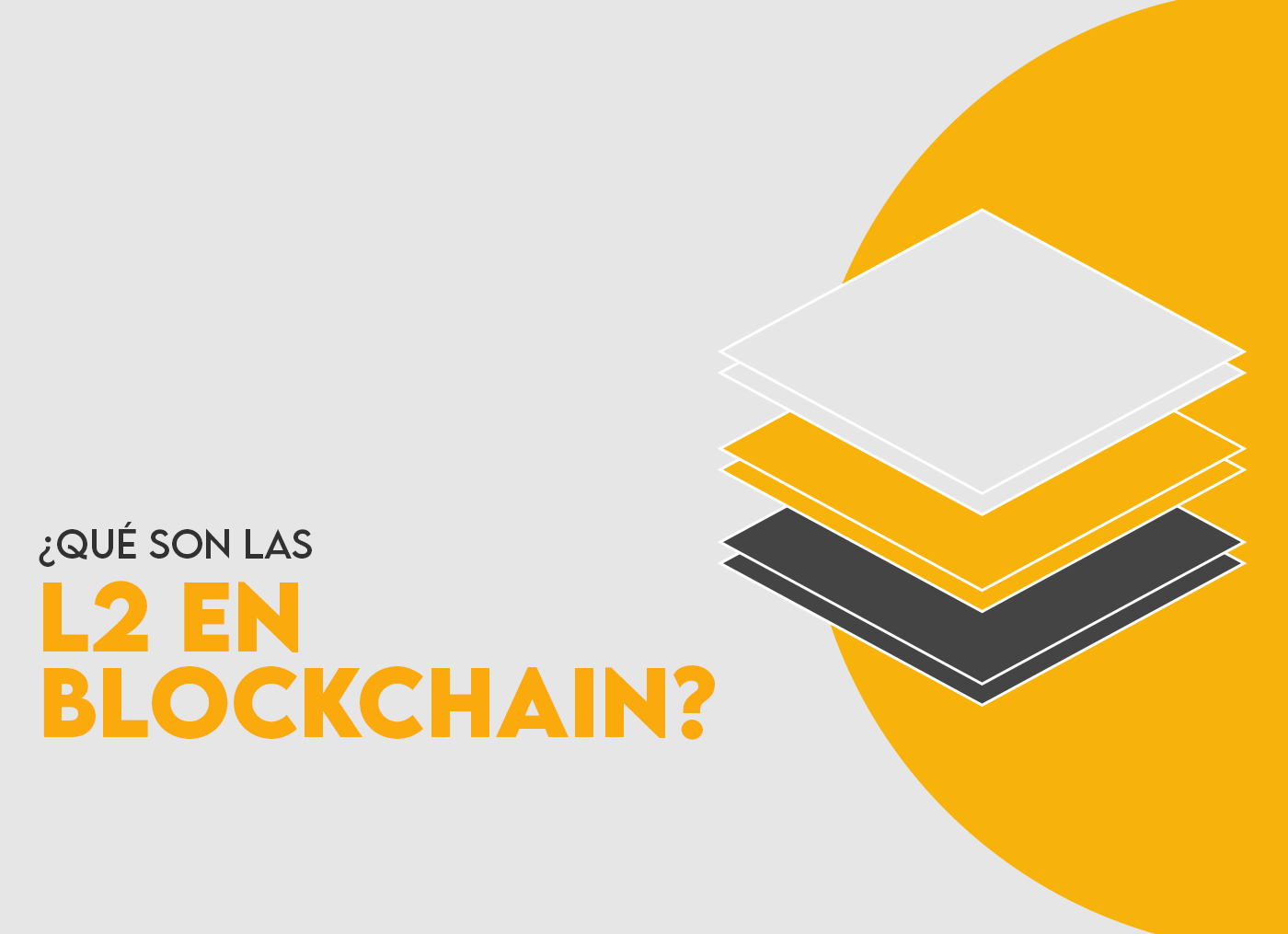
What are L2s in blockchain?
If you're familiar with blockchain technology, you'll know that it's a way to record and verify transactions without the need for an intermediary, which are also executed on decentralized platforms. Level 2 or L2 solutions were born as an alternative to the limited number of transactions that blockchains support. In this article, we'll explain what L2s are, how they work, and their advantages.
What are L2?
Layer 2 are protocols that run outside of the main blockchain but rely on it. These solutions are often referred to as second-layer protocols, off-chain protocols, or scalability solutions.
This means that users can make transactions faster, since they don't have to wait for the confirmation time of the blockchain network.
Most second-layer protocols are based on data anchoring, a way of linking data between two blockchains. Allowing users to execute transactions outside the main chain, but their data is recorded on the main chain.
Some L2 protocols are also based on payment processing. The intention of L2 solutions is that users can make transactions with much lower fees. In some cases, protocols use a mix of these approaches to improve the performance and security of the blockchain network.
How do L2s work?
Layer 2 optimizes blockchain performance, as these protocols allow users to carry out transactions outside the main chain, since they do not require the same workload as a transaction on the mainnet, reducing the waiting time for block confirmation on the network.
Second layer protocols also allow users to carry out transactions attached to the main chain. They are smart contracts that users control to move money off-chain, which also manage the sending and receiving of funds with the mainnet.
Advantages of L2
L2s offer numerous advantages to users of blockchain technology. Here are some of the key benefits:
- Better performance: They allow users to make transactions much faster than on the main chain, which translates into better network performance.
- Lower rates: They allow users to execute transactions with much lower fees.
- Increased Privacy: Some projects already use mechanisms such as zero-knowledge-proof, which allows users to send completely private transactions, without revealing any personal data.
- Scalability: Second layer protocols also allow users to increase network scalability, by offering different tools that would not be possible on the main network.
Examples of L2 protocols
There are a wide variety of L2 protocols available in blockchain technology. Here are some of the most popular protocols:
- Lightning Network: This is a second-layer-based network of payment channels that allows users to transact for commission satoshis on the Bitcoin network.
- Polygon: This is one of the most used L2s in Ethereum, because thanks to its speed and low fees, several dApps have been transferred to its network.
- Raiden Network: The Raiden Network is a second-layer solution that is based on data anchoring. This network allows users to carry out transactions with greater security and scalability on the Ethereum network.
- Plasma: Plasma is an L2 based on payment processing. This solution allows users to transact with much lower fees on Ethereum.
Level 2 solutions are one way to optimize the performance of blockchain technology. In general, these solutions allow users to carry out transactions with greater speed, privacy, scalability and, if that were not enough, they also allow users to carry out transactions with much lower fees.
At El Dorado, we are building the most user-friendly P2P marketplace for Bitcoin and stablecoins in Latin America and we understand the importance of L2 solutions for a future where millions of people will use crypto to make payments.
If you have questions, want to learn more or are passionate about crypto! join our community from El Dorado on Telegram!