

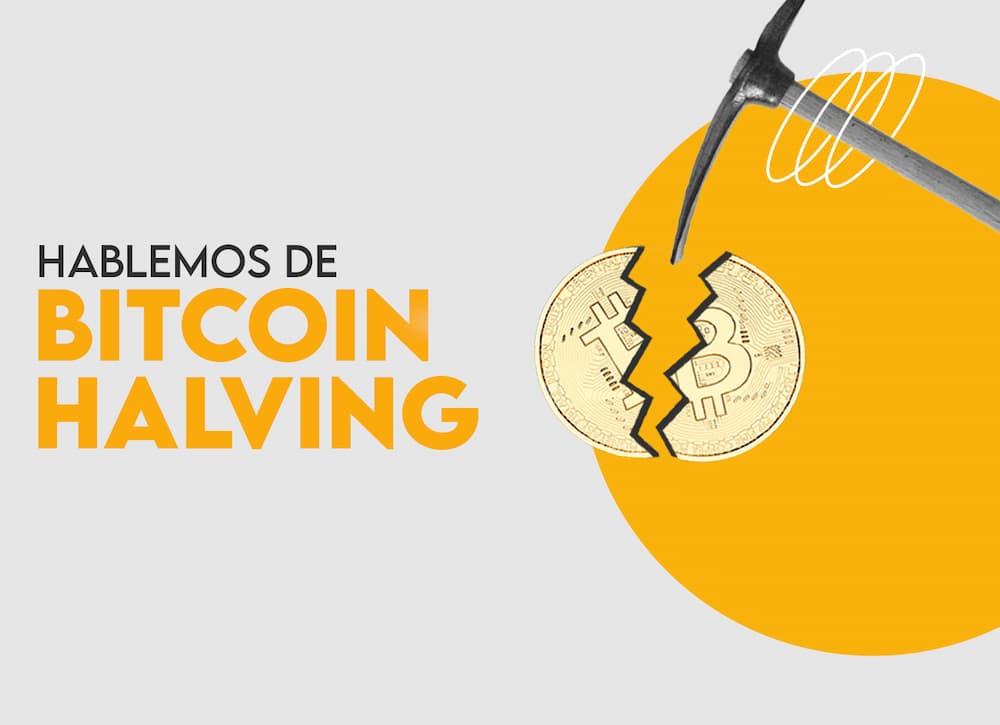
Bitcoin halving is a scheduled event that occurs every 210,000 blocks (approximately every four years) on the Bitcoin blockchain, with the goal of limiting inflation and maintaining the value of Bitcoin. Halving is something very important in the crypto ecosystem, and every time it happens it is an issue that is everywhere. In this article, we will explain in detail what the Bitcoin halving is, its history, why it is fundamental, the impact it has on the price of Bitcoin and we will talk about those other cryptocurrencies being reduced by half.
What is Bitcoin halving?
Halving refers to the process in which, as the name suggests, Bitcoin's block reward is halved. On the Bitcoin blockchain, miners receive a reward for every block they mine. This reward is the motivation for miners to do the work necessary to maintain the Bitcoin network.
With the halving, this reward is halved every 210,000 blocks, meaning that it is produced approximately every four years.
Before the first Bitcoin halving in 2012, miners were receiving 50 BTC per block. After the halving, the block reward was reduced to 25 BTC. The second halving was in 2016, the block reward went to 12.5 BTC and finally we experienced the third halving in 2020, and the current reward is 6.25 BTC.
History of the Bitcoin halving
The Bitcoin halving occurred for the first time on November 28, 2012 and at that time this event generated a lot of interest, since it occurred just after Bitcoin reached its first record price of 1,000 dollars.
The price of Bitcoin was relatively stable for the first two years after the Bitcoin halving, but then it began to rise rapidly in early 2016, followed by the second BTC halving on July 9, 2016. The second halving brought with it a large increase in the price of Bitcoin, the price began to increase at the end of 2016 and peaked at $19,783 in December 2017.
After that, the price of Bitcoin began to decline gradually until the third halving, on May 11, 2020. A little more than a year later, the cryptocurrency reached its all-time high of almost $70,000, and then began to fall again due to the so-called “bear market”. Within the crypto community, there is a lot of speculation about whether the halving actually affects the price of Bitcoin in any way, but for now opinions are quite divided.
Why is halving important?
Halving is one of the mechanisms that control inflation in the Bitcoin blockchain. The idea behind the halving is to limit the amount of new BTC that is introduced into the economy each year, which in turn limits inflation. While the halving occurs every four years, it's the only way in which the amount of new Bitcoin that is delivered to miners can be limited. In contrast, fiat currencies such as the U.S. dollar have an annual inflation rate that can be much higher.
In addition, halving also plays a crucial role in the security of the Bitcoin network. Miners receive a reward for every block they mine, this reward is the motivation for miners to do the work necessary to maintain the Bitcoin network. If the block reward is too low, miners would have less incentive to maintain the network, so halving Bitcoin is essential to keep the network secure and stable.
Opinions about halving the price of Bitcoin
Although the Bitcoin halving has no direct effect on the price of Bitcoin, there is a lot of debate about how it affects the price in the long term. Some believe that the halving limits the supply of Bitcoin, which in turn can cause the price to rise. This theory is based on the idea that if there is less Bitcoin available, buyers will have to pay more for it.
However, others think that the halving doesn't affect the price of Bitcoin in the long term. This theory is based on the idea that the price of Bitcoin depends primarily on demand, which in turn depends on users and investors. If demand is high, the price of Bitcoin will increase regardless of the amount of Bitcoin available.
What other cryptocurrencies are halved?
Bitcoin halving is very important for the cryptocurrency ecosystem, but there are some other cryptos that are also halved. For example, Litecoin also has a halving scheduled every 840,000 blocks (approximately every four years). After its last halving in August 2019, the block reward dropped from 25 to 12.5 LTC.
Other cryptocurrencies with scheduled halves include Bitcoin Cash, Monero and Zcash.
Since you know everything about halving, you are probably wondering, when the next one will be, the exact answer is very difficult to know, but at the time of writing this there are 73,811 blocks left to be mined to reach the next halving. At this rate, we would be talking about the fact that the next big day for Bitcoin will be around the first few days of May 2024.
If you are one of those who believe that the halving affects the price of Bitcoin, you may be interested in buying some BTC now and looking forward to the next halving. We invite you to download El Dorado, where you can buy Bitcoin and other cryptocurrencies with your local currency, quickly and securely.
Don't wait to be told, use El Dorado today!